The Great Wool-Apocalypse

It finally happened. The garbage bags of wool that we have sheared, began oozing out of the garage. It started slowly enough. One bag at a time. Then on Friday, after having to lunge over 5 or 6 bags, I came to the conclusion that if we didn't do something drastic we would eventually be eaten alive.
In an ironic turn of events, an email arrived this weekend from a mill letting me know that my turn had come. But sending wool to the mill, as I was about to realize, isn't just popping it into a box. It's a high-stakes tactical MacGyver like maneuver involving scissors, tape, a small child, a vacuum, sweat and tears, and a level of pickiness that I didn't know I had. Having completed this task, I have established 4 essential steps that must be worked through:

Step 1: Skirting
Skirting is the process of laying out sheared fleece and dealing with all the regrets about your feeding decisions over the last 6 months. You remove low quality belly wool, damaged wool, and tags (which is wool that is covered in poop). It almost feels like an archeological dig. You lay out the fleece and amongst the finds are:
Bits of straw from the previous winter
A stash of corn
Enough "vegetable matter" (VM) to feed the sheep for the next 2 months
Oh...there's that tiny plastic toy I dropped

Step 2: The "Is This Felted?" Panic
While you are skirting the wool, you may come across a clump that feels a little more solid than others. Trying to decide if it's indeed felted or if it's just a little tangled becomes an exercise in forensic analysis. You have to gently tease it apart, squint at it in the sunlight, and praying to the wool gods that you didn't accidently wait too long to shear. You also find yourself silently cursing your farm partner for getting caught up in other projects and not shearing on time.
Step 3: The Final Weigh In
This is where major disappointment happens. You started this with 15 lbs of raw fleece and visions of piles of yarn. But after skirting and removing all the weird parts what remains is about the size of one solitary sheep. Put what remains on the scale and you are down nearly 50%. What was thought to be enough wool to clothe half your community turns out to be enough for one woolen hat.
Step 4: The Box Method
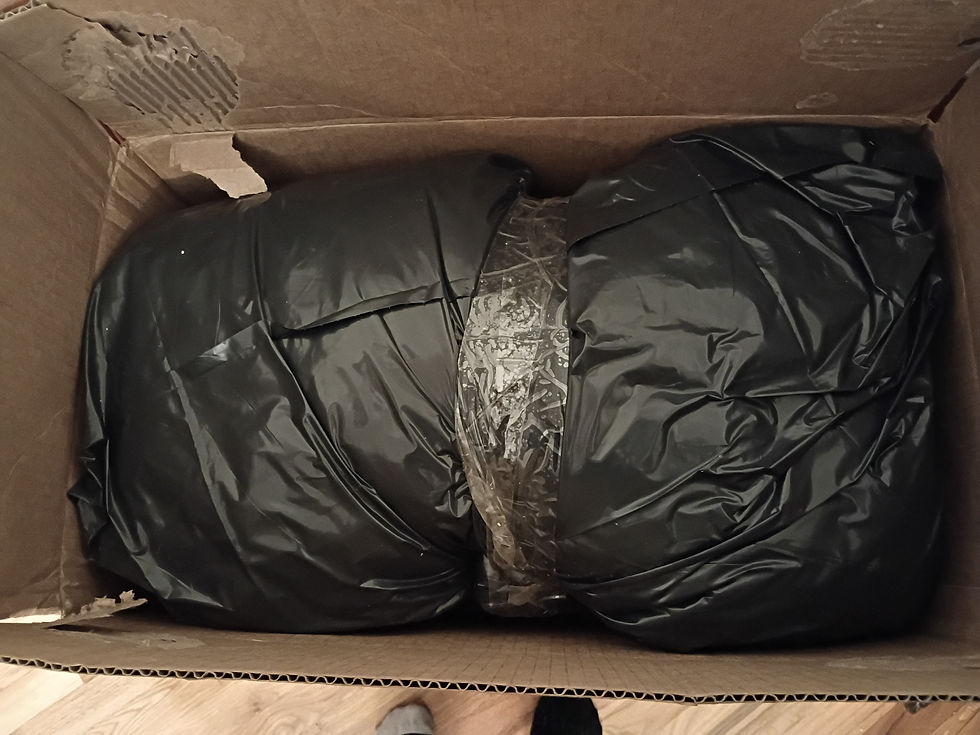
You are almost there. There is 10 lbs of fleece and a box designed to fit about four rolls of toilet paper. If you are lucky, you have a nozzle for your vacuum cleaner that you can stick inside the bag (with a sock covering of course). You then use your entire body weight to help compress the air out of the bag, while strategically using duct tape to make sure it stays out. You squeeze it all in the box, add a few more layers of duct tape, cross your fingers and hope that nobody pokes a hole in your handiwork.
Now we wait. Hopefully in a few months, a box will arrive on my doorstep. Inside will be piles of beautifully spun soft yarn that would have taken me decades to clean and spin on my own. It will make me temporarily forget all the pain that went into getting it to the mill in the first place. So in a year, when I find my garage oozing with wool again, I'll start the whole process over again!


Comments